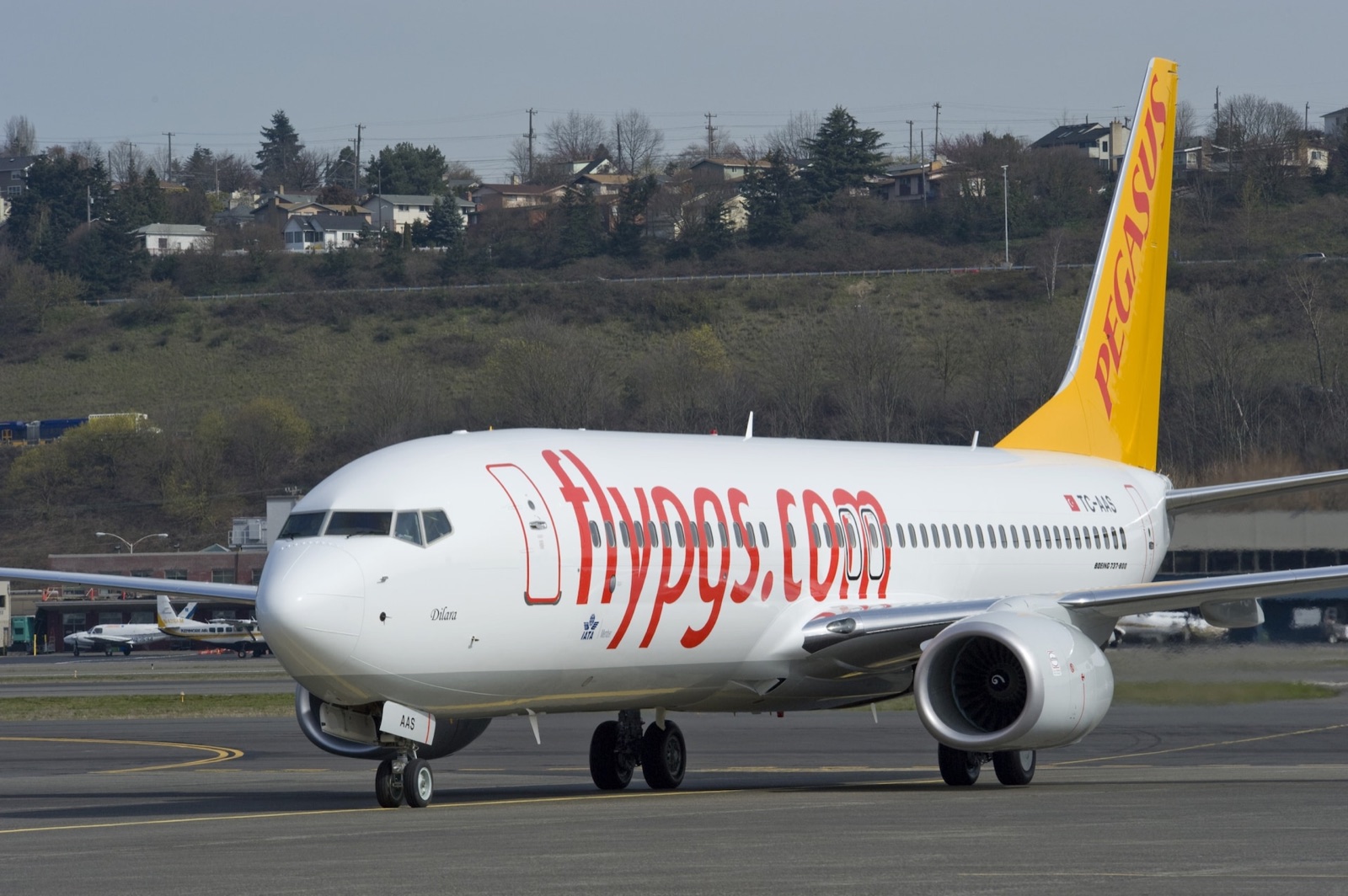
Pegasus Airlines presents itself as Türkiye's first low-cost airline. It also does several things most low-cost carriers leave to others. It runs its own flight crew training centre, maintains its own aircraft and, since 1 October 2026, controls a Czech airline group.
Below are five things our data says about the Pegasus Airlines fleet, its bases and how the operation works. Ryanair and easyJet appear where they help with scale.
1. The Pegasus Airlines fleet is now almost all Airbus
Pegasus's second-quarter 2026 investor presentation lists 131 aircraft at 30 June 2026 (airline report). That figure counts Pegasus Airlines alone, not a wider group. The split is:
- 70 Airbus A321neo
- 46 Airbus A320neo
- 6 Airbus A320ceo
- 9 Boeing 737-800
The same presentation gave an average fleet age of 5.5 years and a planned fleet of 132 aircraft at the end of 2026.
This is a long way from where the airline started. Its first services in 1990 were flown with two Boeing 737-400s. The shift to Airbus began in December 2012, when Pegasus signed for up to 100 aircraft from the A320neo family, 75 of them firm. It was the company's first Airbus order.
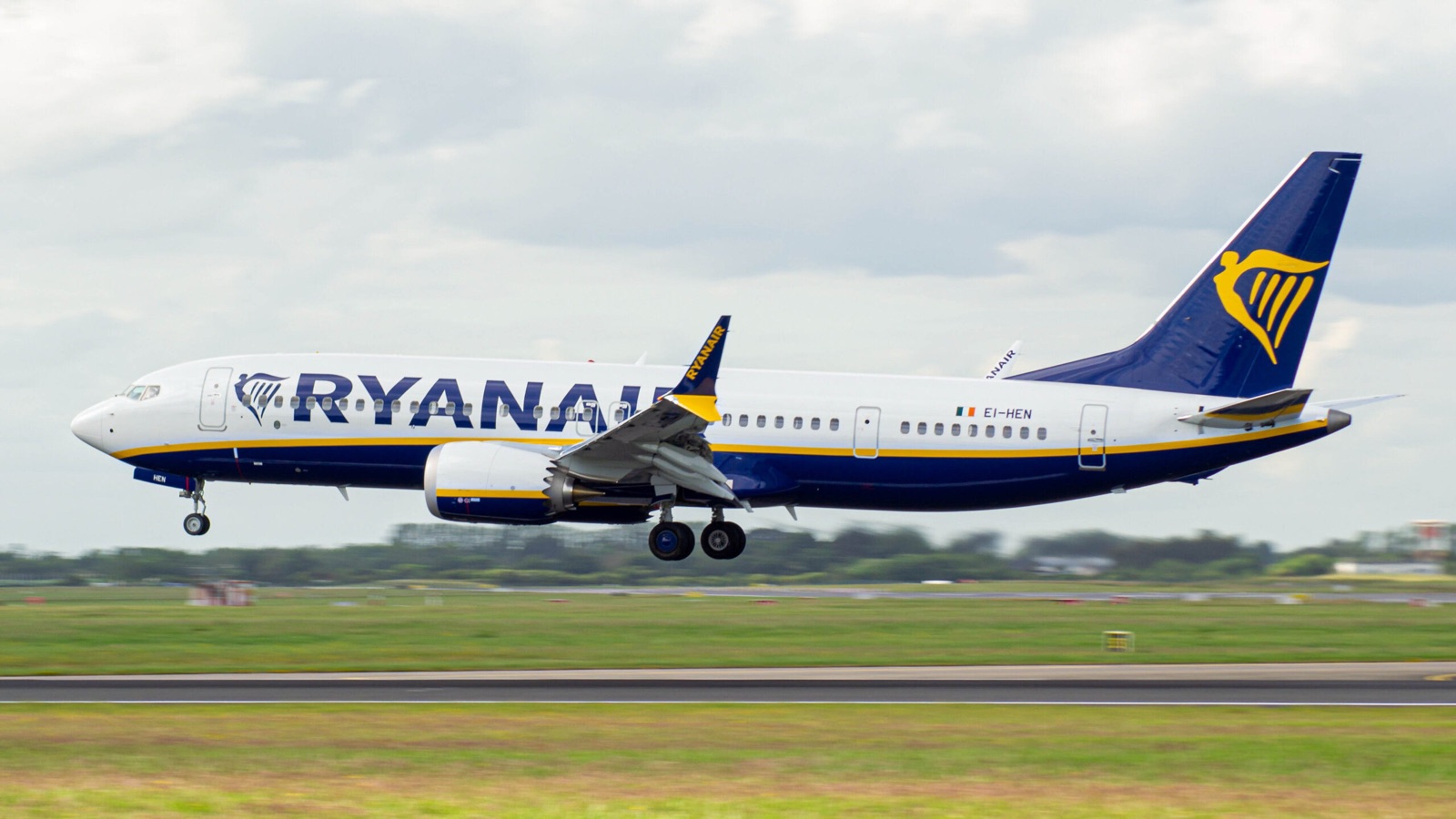
For context, Ryanair reported 647 aircraft at 30 June 2026. That number covers the whole group, five airlines in all, and is made up of Boeing 737s plus 26 Airbus A320s flown by Lauda Europe. easyJet is the closer match on equipment: its half-year report listed 356 aircraft for the whole group at 31 March 2026, all from the A320 family. Set Pegasus's 70 A321neos at 30 June 2026 against easyJet's 22 at 31 March 2026 and you can see how heavily the Turkish airline has leaned on the larger type.
2. Pegasus Airlines bases start at Sabiha Gökçen
The head office is in the Kurtköy area of Pendik, Istanbul, and the main operating base is Istanbul Sabiha Gökçen Airport (SAW). Our database lists further bases at Antalya (AYT), Ankara (ESB), Izmir (ADB), ADA and TZX.
From those airports the company says its network reached 158 destinations in 55 countries by the end of 2025, spread across Turkey, Europe, Asia and North Africa. Pegasus has also kept flying to Russia since 2022, when most Western carriers stopped.
That reach sets it apart from the two peers here. Ryanair's network is mainly European, with routes also to Morocco, Jordan and Turkey. Pegasus sits on the other side of that map, with Istanbul as the pivot between Europe and points further east.
3. It began as a charter airline
Pegasus was set up on 1 December 1989 as an inclusive-tour charter airline by two Turkish businesses, Net and Silkar, in partnership with Aer Lingus. It flew its first services on 15 April 1990. Aer Lingus and Net sold their shares in 1994 to the Istanbul bank Yapı Kredi.
The change that matters came in January 2005, when Esas Holding bought the company. Two months later Pegasus was converted into a low-cost scheduled carrier. Its investor relations site says scheduled flying began with five aircraft and six destinations.
The shares began trading on Borsa Istanbul, under the ticker PGSUS, on 26 April 2013, and Esas Holding has remained the controlling shareholder since. Along the way Pegasus ran a joint venture with Air Berlin aimed at the Germany–Turkey charter market. Air Berlin Turkey launched in November 2011 and was folded into Pegasus on 31 March 2013. Güliz Öztürk became chief executive on 1 May 2022.
4. Fares come as packages, and bags depend on the route
Pegasus flies a single-class cabin. Food and drink are sold on board rather than included. Fares are sold as packages: Light, Saver, Saver Plus and Comfort Flex. What each one includes depends on whether the flight is domestic or international, with North Cyprus following the international rules.
The allowances below come from the Pegasus General Rules and baggage allowance page, read on 24 October 2026:
- Under-seat bag: one bag of up to 40 x 30 x 15 cm and 3 kg, included in all packages on international and North Cyprus flights, Light included.
- Cabin bag: one bag of up to 55 x 40 x 23 cm and 8 kg. Included in every domestic package. On international and North Cyprus flights it comes with Saver, Saver Plus and Comfort Flex, not Light.
- Checked bag: Saver, Saver Plus and Comfort Flex include 20 kg on international and North Cyprus flights. Light includes none; one can be added, starting from 12 kg.
- Heaviest single piece: 32 kg on all Pegasus flights.
Bags found at boarding to exceed the size or piece limits are moved to the hold for a charge. The rule to remember is the split: every domestic package keeps a cabin bag, while international Light does not. For comparison, Ryanair's all-fares allowance is a small personal bag of up to 40 x 30 x 20 cm, and easyJet's small under-seat bag can measure up to 45 x 36 x 20 cm.
Behind the scenes, Pegasus runs its own flight crew training centre and its own maintenance organisation, Pegasus Technic. Many low-cost airlines buy that work in.
You can search routes from our Book Flights page; check which package a fare belongs to before comparing it with another airline's.
5. It now owns Czech Airlines and Smartwings
The largest recent change is outside Turkey. In December 2025 Pegasus agreed to buy Czech Airlines and its subsidiary Smartwings. The deal was completed on 1 October 2026 through its Dutch subsidiary, Pegasus Europe B.V., after approvals in Turkey, the Czech Republic and other countries where the Smartwings group operates.
Pegasus now controls 100% of České aerolinie a.s., 70% directly and 30% through Smartwings. The Czech competition regulator required Pegasus to hand some summer slots on the Prague–Antalya route to another airline.
Smartwings continues day-to-day operations under the Smartwings and Czech Airlines brands. Czech Airlines no longer holds its own operating certificate and carries on as a brand within the group.
One point for readers of our figures: the 131-aircraft count is dated 30 June 2026 and covers Pegasus alone, so it predates the deal and does not include the Czech operation.
Our take
In our view Pegasus is one of the more interesting low-cost airlines on our list, largely because it ignores parts of the textbook. It has bet on the bigger A321neo rather than simply more aircraft, and it keeps training and maintenance in-house where others outsource.
The package system is easier to read than a long menu of extras, but international Light is genuinely bare: an under-seat bag and nothing else. Travellers used to domestic Turkish fares, where a cabin bag is always included, should not assume the same applies abroad.
The Czech deal is the thing to watch. Pegasus is now a two-country group, and we will be looking at whether future reports keep counting Pegasus on its own or start presenting the group as one fleet.
Flying with Pegasus Airlines?
Compare Pegasus Airlines fares with our booking partner.We may earn a commission when you book through links on this site — this never affects the price you pay.How we earn money
Sources
- 1Pegasus Airlines: Airline reportFleet figure · As of 30 June 2026
- 2Ryanair: Airline report (Q1 FY27 presentation)Fleet figure · As of 30 June 2026
- 3easyJet: Airline reportFleet figure · As of 31 March 2026
- 4Photo: Pegasus Airlines press officePhoto
Spotted something out of date? Tell us.