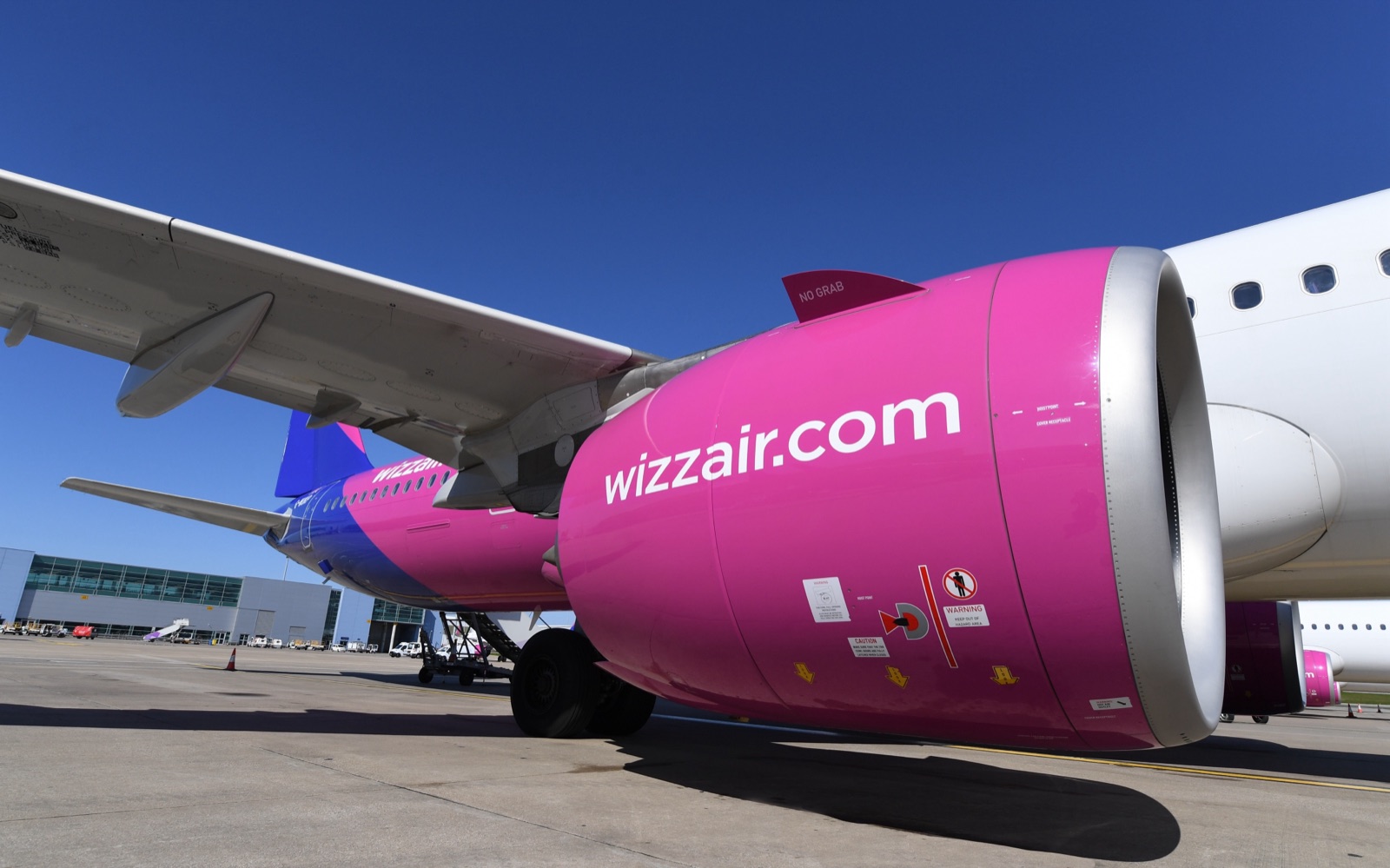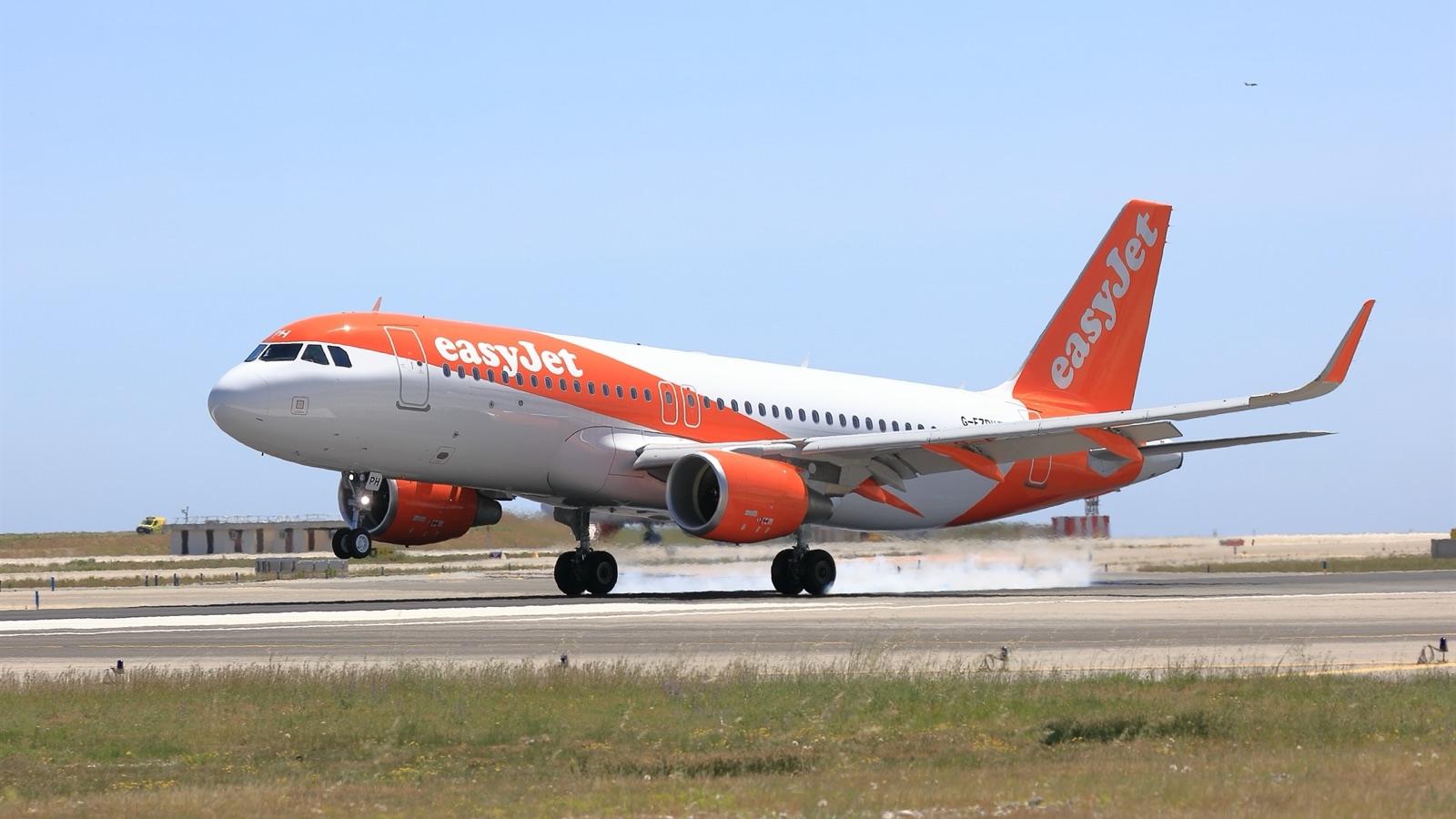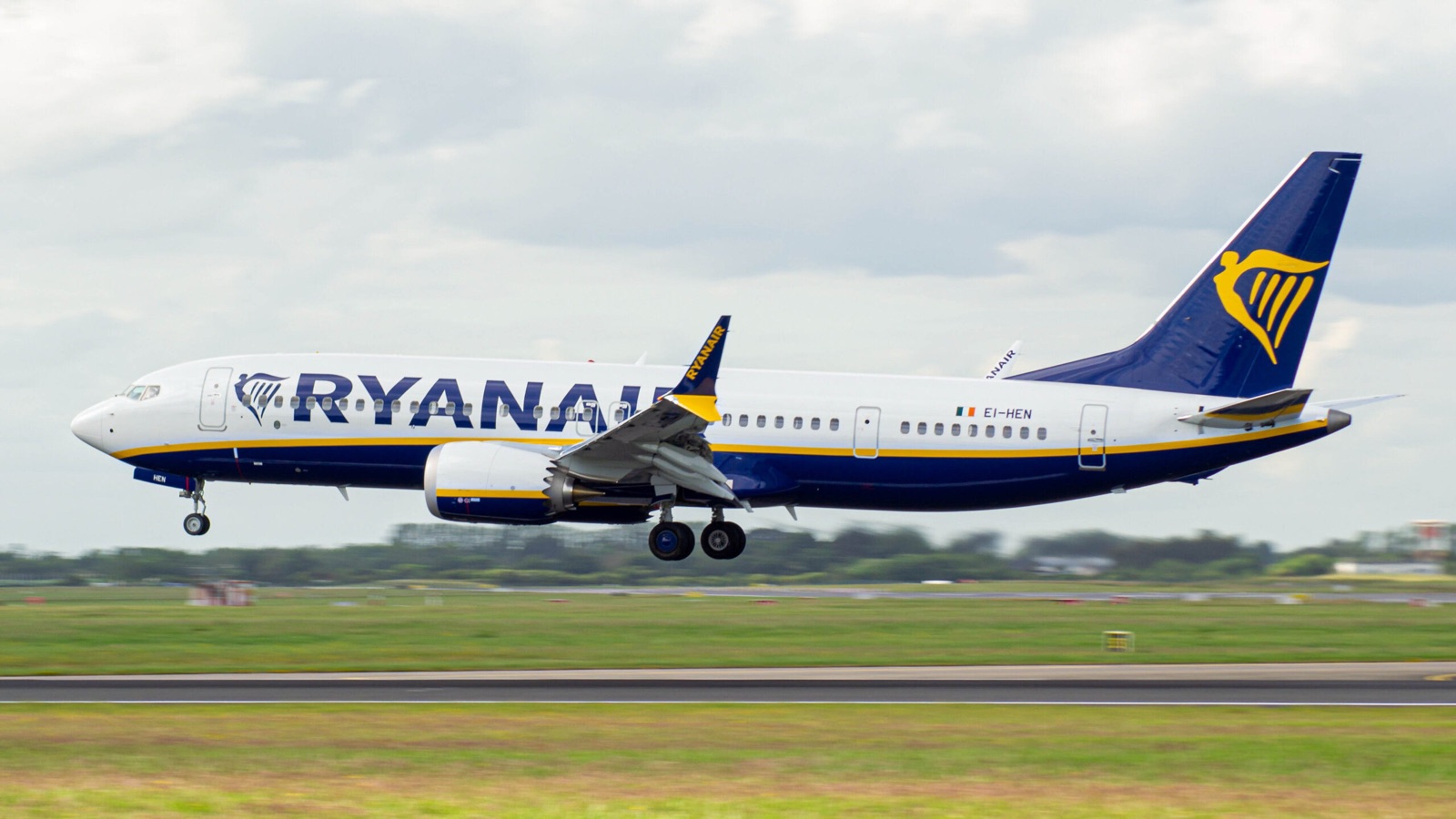
Ryanair is the reference point for low-cost flying in Europe, like it or not. This profile sets out what our database holds on the Ryanair group: its model, its bases, its fleet and what all of that means at the gate. easyJet and Wizz Air appear only where they help put Ryanair's figures in context.
How the Ryanair model works
Ryanair is an Irish airline group headquartered in Swords, County Dublin. The parent, Ryanair Holdings plc, runs five airlines under separate operating certificates: Ryanair DAC, Buzz, Malta Air, Lauda Europe and Ryanair UK. Passengers see one brand and one booking site, but the aircraft on a given route may belong to any of the five.
From a turboprop to a Boeing operation
The first service flew on 8 July 1985, between Waterford and London Gatwick, on a 15-seat Embraer Bandeirante turboprop. The early years lost money. In 1990 Michael O'Leary, then a senior executive, visited Dallas and came back with a plan to rebuild the airline as a low-cost carrier: one aircraft family, fast turnarounds, tight cost control and low fares ahead of onboard frills. The network was cut sharply that year and the London operation moved from Luton to Stansted.
O'Leary became chief executive in January 1994, the same year Ryanair took its first Boeing 737. The holding company followed in 1996, and the shares were listed in Dublin and on NASDAQ in May 1997. The multi-airline structure is newer. Ryanair UK was set up in December 2017. Buzz took its current name in 2019. Laudamotion was bought in stages during 2018 and now flies as Lauda Europe. Malta Air was created in June 2019.
What the ticket buys
Ryanair is generally described as an ultra-low-cost carrier. The base ticket covers the seat and one small bag that fits under the seat in front. Larger cabin bags, checked bags, seat selection and other items are sold separately.
The economics rest on high aircraft utilisation, low airport charges and a single aircraft family for crews and maintenance. That last point is easy to overlook. When crews and engineers all work on the same type, schedules are simpler to patch and spares go further.
Ryanair bases and the network
The group operates more than 3,500 short-haul flights a day to around 230 airports in 36 countries. Most of the network is in Europe, with routes also to Morocco, Jordan and Turkey. In the year to 31 March 2025 it carried 200 million passengers.
Stansted, Dublin and Bergamo
London Stansted is the largest base, followed by Dublin; Milan Bergamo is the other main base. Our database also lists Manchester, Barcelona and Charleroi among Ryanair's hub airports. For a live view of the two biggest, see the Stansted departures board and the Dublin departures board.
The peers lean on different airports. easyJet's hub list in our data includes London Gatwick, Luton and Manchester. Wizz Air's largest bases are Budapest, Bucharest Henri Coandă and London Luton.
Bases follow the fees
Ryanair is open about moving aircraft between countries depending on airport fees and aviation taxes. Capacity goes where levies fall and comes out where they rise. In 2025 it reduced flying at Billund and Aalborg in Denmark. In 2026 it did the same at Charleroi and at a number of smaller Spanish and Portuguese airports, each time citing taxes or airport charges.
So a base on the list is not a promise. Charleroi still appears among Ryanair's hub airports in our records, yet it was one of the places trimmed in 2026. If you rely on a particular regional route, treat it as seasonal rather than permanent.
easyJet takes a different line, putting weight on positions and slots at primary airports rather than relying on secondary ones. That is a real difference in strategy, not just branding.
The Ryanair fleet
Ryanair's FY26 results gave a group fleet of 647 aircraft at 31 March 2026. The total was unchanged at 30 June 2026, which is the date of the figure we display. That count covers the whole airline group, not Ryanair DAC alone (source: Ryanair FY26 results). It breaks down as follows:
- Boeing 737-800/-700: 411 aircraft. The split between the two types is not published.
- Boeing 737-8200: 210 aircraft.
- Airbus A320: 26 aircraft, flown by Lauda Europe.
The 737-8200 is a higher-density version of the 737 MAX 8, built to Ryanair's specification. The results describe 621 Boeing 737s in all, so the single-family claim largely holds. The Lauda Europe A320s are the exception.
The next chapter is already on order. In May 2023 the airline ordered 150 Boeing 737 MAX 10s, with options on 150 more. They are due for delivery between 2027 and 2033, mainly to replace the older 737-800s. In February 2026 Ryanair also signed an engine-maintenance services agreement with CFM International. Our data gives no average fleet age for Ryanair, so we won't guess one.
For context, easyJet's half-year report gave a group fleet of 356 aircraft at 31 March 2026, all from the Airbus A320 family. That figure comprised 79 A319s, 180 A320ceos, 75 A320neos and 22 A321neos.
Wizz Air said in a release dated 2 October 2026 that its group operates 276 Airbus A320 and A321 aircraft. That count includes aircraft kept on the ground by an engine inspection programme.
Comparing the three headline figures (647, 356 and 276, each at a different date), Ryanair's is plainly the largest.
What it means for travellers
The practical effect of Ryanair's model is that the fare you see is a starting point. Here is what its help centre sets out, as read on 24 October 2026. Always check your booking for what your fare includes.
- Small personal bag (all fares): up to 40 x 30 x 20 cm, stowed under the seat in front.
- Priority & 2 Cabin Bags (add-on): adds one bag of up to 10 kg and 55 x 40 x 20 cm in the overhead locker, with priority boarding.
- Check-in bags (add-ons): 10 kg, 20 kg or 23 kg. The 20 kg and 23 kg bags can measure up to 80 x 120 x 120 cm. Up to three 20 kg bags can be added per passenger, but only one 23 kg bag.
- Infants on an adult's lap: no cabin bag of their own. They may have a baby bag of up to 5 kg (45 x 35 x 20 cm), plus two items of baby equipment free of charge.
Ryanair's free bag has the same dimensions as Wizz Air's included carry-on, at 40 x 30 x 20 cm. easyJet's small under-seat bag is larger, at 45 x 36 x 20 cm. Wizz Air caps that bag at 10 kg and easyJet at 15 kg. The allowance we hold for Ryanair gives dimensions only, with no weight.
A few recent changes affect the trip itself:
- Paper boarding passes were withdrawn in November 2025 in favour of digital ones, so a working phone matters.
- In June 2026 Ryanair said parents could sit next to their children free of charge.
- Since August 2025, an agreement with Booking Holdings has allowed its brands to sell Ryanair flights, ending a three-year legal dispute.
On pricing generally, extras are sold one by one, so the cheapest-looking fare and the cheapest trip are not always the same thing. Add up the bags and seats you actually need before comparing carriers. If you want to weigh up options, our Book Flights page is a sensible place to start.
Our take
In our view, Ryanair is best understood as a cost machine that happens to sell seats. The single-type fleet, the readiness to pull aircraft when charges rise and the unbundled fare all point the same way. None of it is hidden; the help centre is explicit about what the base ticket covers.
The flip side is that the network is a moving target. The 2025 and 2026 cutbacks at Danish, Belgian, Spanish and Portuguese airports show how quickly a base can lose flying when the sums change. If you live near a secondary airport, enjoy the routes while they last, but don't plan around them years ahead.
Set against easyJet's primary-airport strategy and Wizz Air's base map centred on Budapest and Bucharest, Ryanair has the largest fleet of the three on the figures we hold. The MAX 10 order suggests it intends to stay that way. Delivery timetables, though, are the airline's promise, not ours.
Flying with Ryanair?
Compare Ryanair fares with our booking partner.We may earn a commission when you book through links on this site — this never affects the price you pay.How we earn money
Sources
- 1Ryanair: Airline reportFleet figure · As of 30 June 2026
- 2easyJet: Airline reportFleet figure · As of 31 March 2026
- 3Wizz Air: Airline reportFleet figure · As of 2 October 2026
- 4Photo: Ryanair press officePhoto
Spotted something out of date? Tell us.