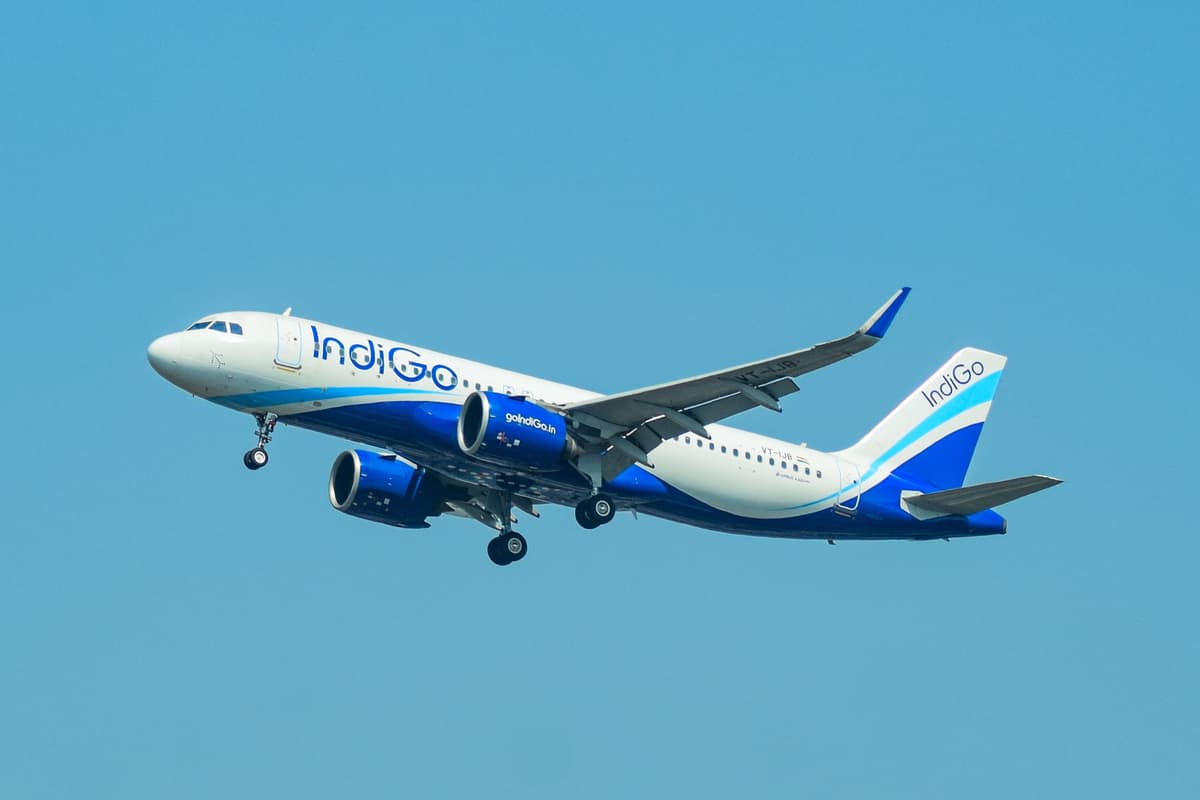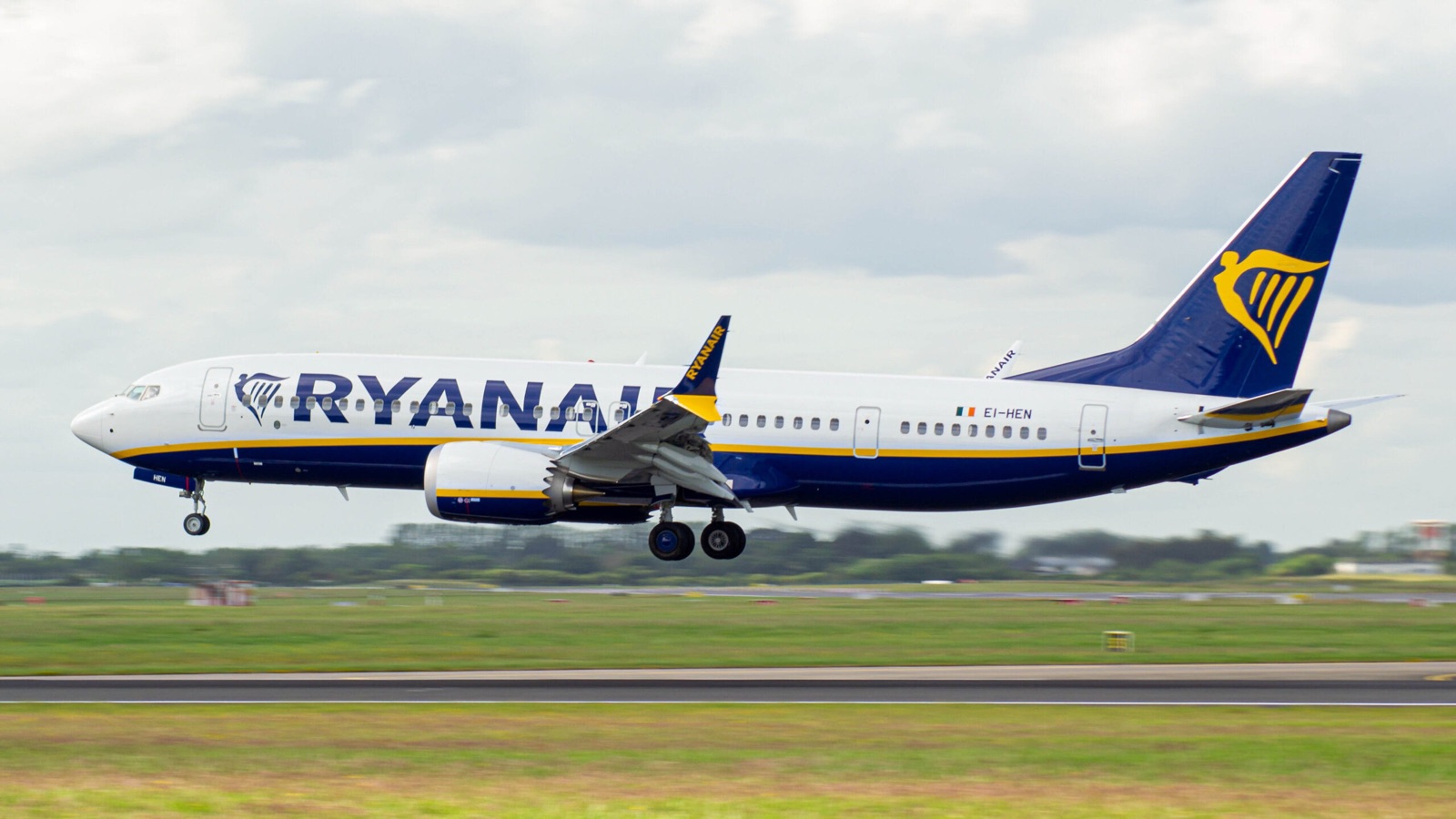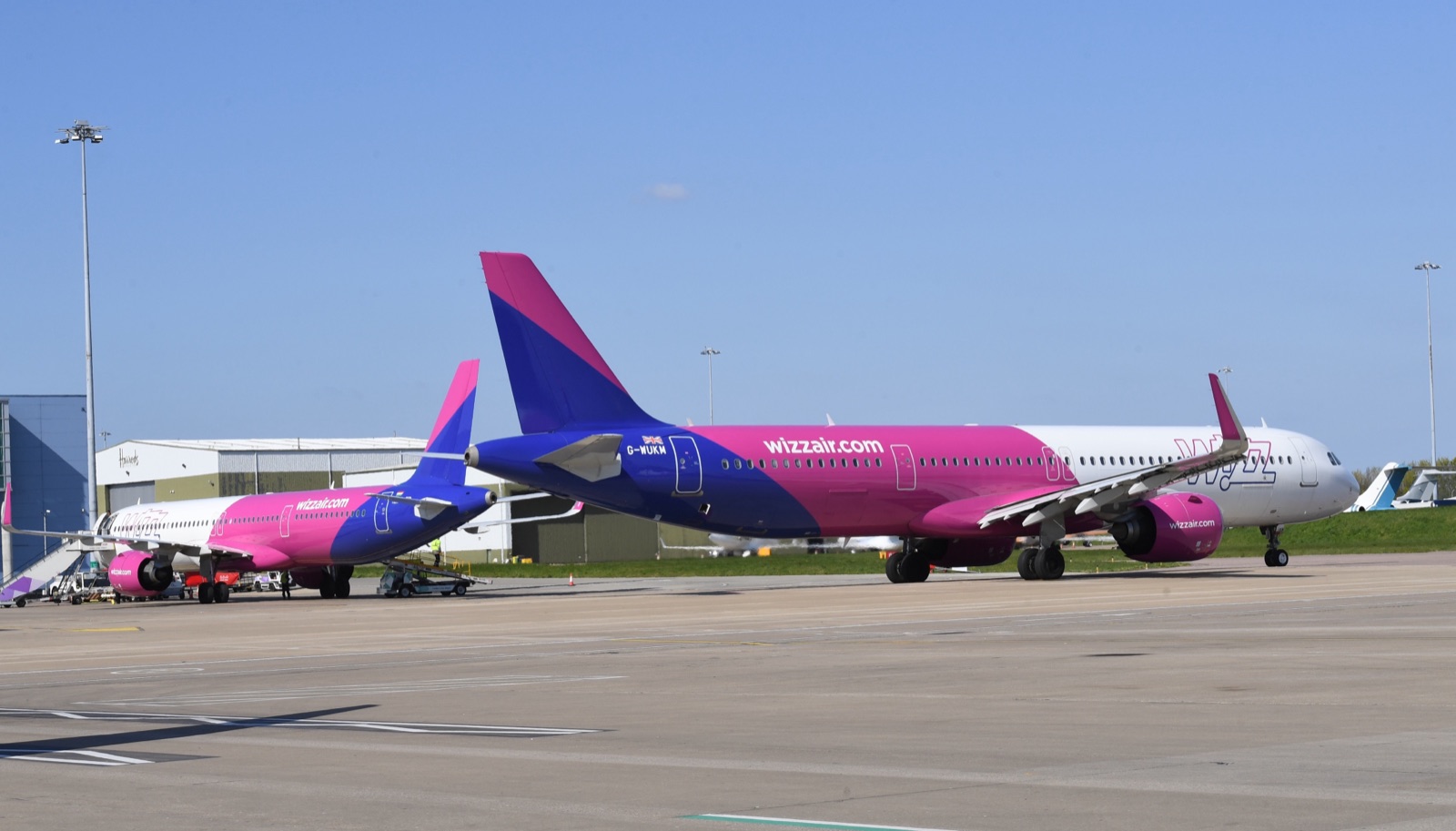
Wizz Air is the Hungarian name in Europe's low-cost market. It is run from Budapest, flies one family of Airbus narrowbodies and sells a bare base fare with almost everything else priced on top. This profile sets out what our data says about how it operates, where it flies from and what is in its fleet, with two regional peers alongside for scale.
How the Wizz Air model works
Wizz Air calls itself an ultra-low-cost airline, and its stated ambition for 2026 is to be Europe's most loved one. The model will be familiar to anyone who has flown the segment. There is a single aircraft family, and the base fare includes only a small under-seat bag. Larger bags, seat choice and other services are sold separately.
The corporate structure is less obvious. The parent, Wizz Air Holdings plc, is registered in Jersey and listed on the London Stock Exchange. The main operating company is based in Budapest.
Three airlines under one brand
Three airlines fly as Wizz Air. Wizz Air Hungary, the original company, holds the W6 code. Wizz Air UK was set up in October 2017 and began flying in March 2018 from Luton, partly to protect access to the British market after Brexit. Wizz Air Malta made its first flight, Rome Fiumicino to Malta, on 27 September 2022.
Not every offshoot has lasted. Earlier operations in Bulgaria and Ukraine were folded back into the Hungarian company, and the Abu Dhabi joint venture, Wizz Air Abu Dhabi, closed on 1 September 2025. Flights between Europe and the United Arab Emirates continue.
Where it started
The company was established in September 2003 by József Váradi, who had previously run the Hungarian state airline Malév and is still chief executive. The US private equity firm Indigo Partners was the lead investor. The first flight left Katowice in Poland on 19 May 2004, and the shares were listed in London on 25 February 2015.
Wizz Air bases and the network
Our database lists six hub airports for the group: Budapest, Bucharest Henri Coandă, London Luton, Rome Fiumicino, Warsaw and Katowice. The largest are Budapest, Bucharest and Luton. From these and its other bases the network reaches airports in 45 countries across Europe, North Africa and the Middle East, according to the airline's investor site.
The thing to understand about Wizz Air bases is that they move. Wikipedia records the Vienna base as closing in March 2026. In the other direction, extra Luton slots bought from TUI in December 2025 let the airline base a 15th aircraft there and add six routes for summer 2026, among them London to Yerevan.
Luton is shared ground. easyJet is headquartered there and lists it among its bases in our data. Ryanair, by contrast, moved its London operation from Luton to Stansted back in 1990.
There is also a transatlantic thread. In early 2026 Wizz Air UK applied to the US Department of Transportation for authority to fly between the UK and the United States. No routes had been announced at the time of the application.
Wizz Air publishes traffic monthly. In September 2026 the group carried 7.78 million passengers at a load factor of 92.0%, and 79.3 million in the twelve months to the end of that month.
The Wizz Air fleet
In its September 2026 traffic release, dated 2 October 2026, Wizz Air said it operates 276 Airbus A320 and A321 aircraft. That figure counts the whole airline group (the Hungarian, UK and Malta operations together), and the release does not give a split between the two types. You can read it in the airline's traffic report. The investor site gives an average age of 4.6 years.
Two peers for scale
Ryanair reported a group fleet of 647 aircraft at 30 June 2026, mostly Boeing 737s alongside 26 Airbus A320s flown by Lauda Europe. easyJet's half-year report gave a group fleet of 356 at 31 March 2026, all Airbus A320 family: 79 A319s, 180 A320ceos, 75 A320neos and 22 A321neos.
Set those group totals against Wizz Air's 276, and Wizz Air has the smallest of the three fleets. The dates differ, so treat that as a rough ordering rather than a snapshot. On type, Wizz Air sits closer to easyJet, with both running Airbus narrowbodies, but it leans harder on the larger A321.
The engine problem
The fleet has been increasingly built around the A321neo. Those aircraft use Pratt & Whitney's PW1100G geared turbofan, and the inspection programme for that engine has kept part of the fleet on the ground since 2024. Wikipedia reports the chief executive as expecting the affected aircraft back in service by late 2027 or early 2028.
One detail matters for reading the numbers: the headline count of 276 includes the grounded aircraft. It describes what the group has, not what is flying on a given day.
Plans to the 2030 financial year
A November 2021 order covered 75 more A321neos and 27 long-range A321XLRs. At a capital markets day on 17 September 2026, Wizz Air set targets for its 2030 financial year that include an all-neo fleet of 335 aircraft carrying 127 million passengers.
The same update struck a more cautious note for the near term. The airline said it had trimmed planned capacity for the second half of the current financial year by 5%, citing geopolitical and fuel-price volatility.
What it means for travellers
The fare you see first is the starting point, not the finished price. Wizz Air's model makes its money on what you add, so the useful comparison between airlines is the total for the bags and seats you actually need.
Bags are where most of that difference sits. Wizz Air's help centre, read on 24 October 2026, lists these allowances:
- Included with every ticket: one bag of up to 40 x 30 x 20 cm and up to 10 kg, which must fit under the seat in front.
- With WIZZ Priority: an additional trolley bag of up to 55 x 40 x 23 cm and up to 10 kg, in the overhead locker.
- Checked bags: bought separately or in the WIZZ GO and WIZZ PLUS bundles, at 10 kg, 20 kg, 26 kg or 32 kg, with maximum dimensions of 149 x 119 x 171 cm and up to six per passenger.
Size limits exclude handles and wheels, but wheels may add no more than 5 cm. Bags over the limits are charged extra, and bags can be added at booking, later through a WIZZ Account or the call centre, or at the airport. The full rules are on the Wizz Air baggage page.
For comparison, Ryanair's free small personal bag has the same 40 x 30 x 20 cm limit. easyJet's under-seat bag is listed at up to 45 x 36 x 20 cm and 15 kg, with sizes including handles and wheels. A bag that passes at one airline will not automatically pass at another, so measure it.
The other practical point is schedule churn. Bases open and close, aircraft are still waiting on engines and capacity has just been trimmed. Book with that in mind, and check your flight details again closer to departure. If you want to see what is on offer for a particular route, our Book Flights page is a reasonable place to start.
Our take
Wizz Air is easy to underestimate because its fleet figure is smaller than those of the two peers here. In our view that misses the point. It has built a dense eastern and central European network from Budapest, Bucharest and Poland, while keeping a serious foothold at Luton, and its September 2026 load factor suggests the aircraft it does fly are full.
The weak spot, as we see it, is reliability of plans rather than reliability of product. Bases close, ventures in Abu Dhabi and elsewhere have been wound up, and a slice of the fleet has been parked for engine work since 2024. The 2030 targets are ambitious, and we would watch how many grounded A321neos actually return on the timetable the chief executive has given.
For passengers the rule is simple. Read the bag allowance, price the extras before you compare, and do not assume a route you flew last year will still be there next year.
Flying with Wizz Air?
Compare Wizz Air fares with our booking partner.We may earn a commission when you book through links on this site — this never affects the price you pay.How we earn money
Sources
- 1Wizz Air: Airline reportFleet figure · As of 2 October 2026
- 2Ryanair: Airline report (Q1 FY27 presentation)Fleet figure · As of 30 June 2026
- 3easyJet: Airline reportFleet figure · As of 31 March 2026
- 4Photo: Wizz Air press officePhoto
Spotted something out of date? Tell us.