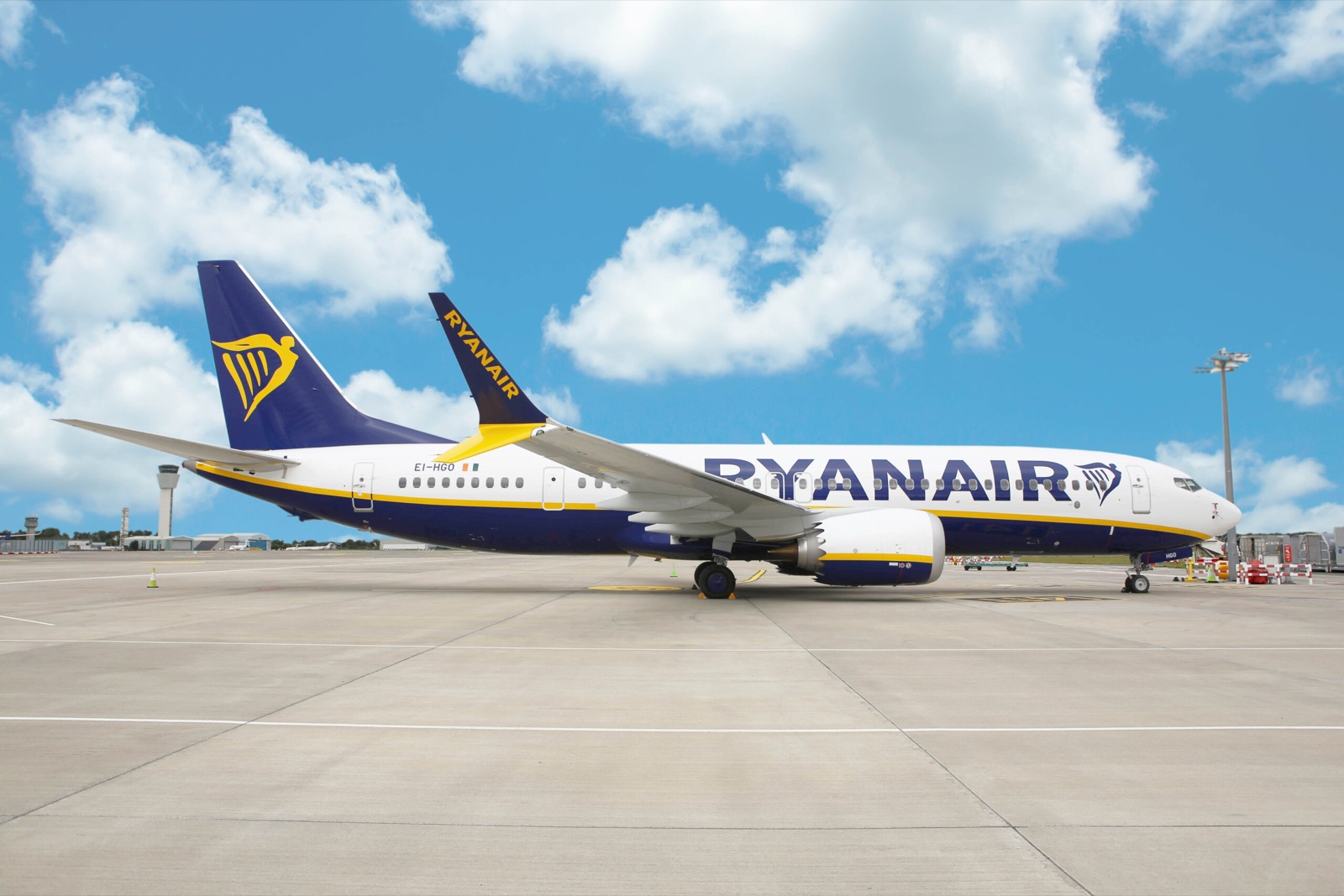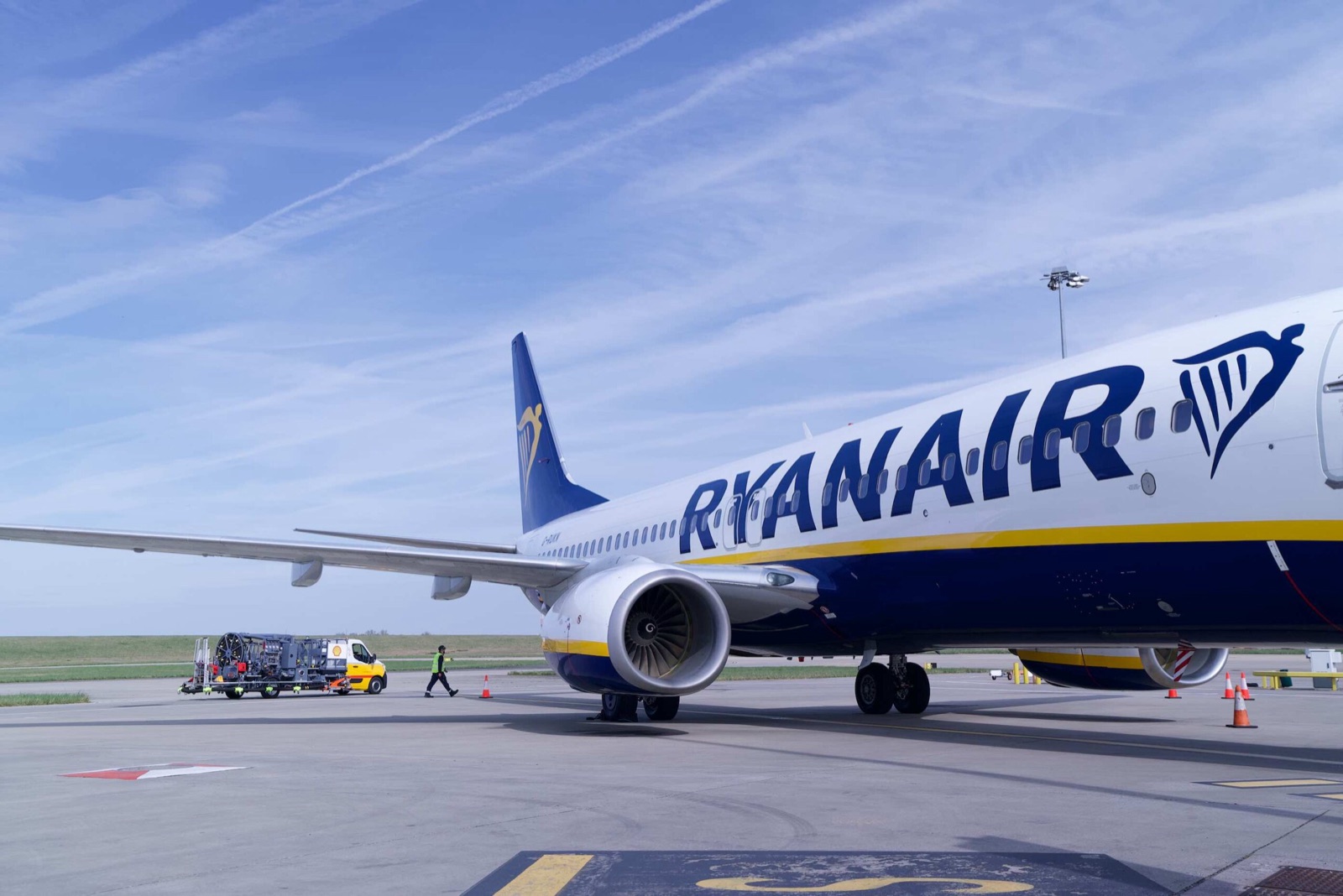
The clearest difference in any Ryanair vs easyJet comparison is fleet size. Our data gives the Ryanair group 647 aircraft at 30 June 2026. It gives the easyJet group 356 aircraft at 31 March 2026. Both figures count the whole airline group, and both come from the airlines' own reports.
Comparing those two figures, Ryanair runs the larger fleet. Bear in mind that the figures describe different dates.
The second difference is just as plain. Ryanair is built around the Boeing 737, with a batch of Airbus A320s at one subsidiary. easyJet flies only Airbus A320-family aircraft. Most of what follows comes from those two choices, plus very different views on which airports are worth flying to.
Fleet figures side by side
The table shows the current figure we hold for each group, the date it describes, what it counts, and the hub airports in our profiles.
Ryanair's figure traces to its FY26 results. These gave 647 aircraft at 31 March 2026, and the total was unchanged at the end of June 2026.
easyJet's figure comes from its half-year report. Of its 356 aircraft, 208 were owned and 148 leased.
The group point matters. Ryanair Holdings runs five airlines under separate operating certificates. Passengers mostly see one brand and one booking site, but the aircraft on a given route may belong to any of the five. easyJet flies under three certificates: easyJet UK, easyJet Europe (registered in Austria) and easyJet Switzerland.
Who each suits: fleet size alone tells you little about your own trip. A bigger group fleet does not mean more flights on the route you want. Ryanair suits travellers who do not mind which group airline operates their flight. easyJet suits those who like a simpler three-company structure behind the brand.
Boeing versus Airbus
Ryanair's fleet breaks down into three groups:
- 411 Boeing 737-800/-700s (the split between them is not published)
- 210 Boeing 737-8200s, a higher-density version of the 737 MAX 8 built to Ryanair's specification
- 26 Airbus A320s flown by Lauda Europe
In May 2023 Ryanair ordered 150 Boeing 737 MAX 10s, with options on 150 more. They are due for delivery between 2027 and 2033, mainly to replace older 737-800s.
easyJet's fleet is all Airbus:
- 79 A319s
- 180 A320ceos
- 75 A320neos
- 22 A321neos
easyJet started with Boeing 737s. It has ordered only A320-family aircraft since an A319 order in 2002, and the Boeings have been retired. The larger A321neo, first delivered in July 2018, is used on busy routes and at slot-constrained airports.
An agreement with Airbus in December 2023 covers 157 further aircraft, for delivery from 2029: 56 A320neos and 101 A321neos.
We do not hold an average fleet age for either airline, so we make no claim about which fleet is younger.
Who each suits: few passengers book by aircraft type. Anyone who follows fleets will find both groups mixing older and newer generations. Ryanair suits travellers comfortable with a high-density 737 cabin. easyJet suits those who want to know their flight will be on an A320-family jet, whichever variant turns up.
Networks and bases
Our Ryanair profile describes more than 3,500 short-haul flights a day to around 230 airports in 36 countries. Most are in Europe, with routes also to Morocco, Jordan and Turkey. That description carries no specific date, so treat it as a general picture rather than a dated count.
easyJet reported 1,207 routes to 164 airports in 38 countries at 31 March 2025.
On those figures, Ryanair reaches more airports and easyJet reaches more countries. The dates differ, and Ryanair's airport count is approximate.
The bases tell you more than the totals. London Stansted is Ryanair's largest base, followed by Dublin. Milan Bergamo is its other main base, and Barcelona and Charleroi also appear in its hub list.
easyJet's hubs include London Gatwick and London Luton, along with Bristol, Milan Malpensa and Geneva. It opened bases at Alicante and Birmingham in 2024, taking its total to 30. Manchester is the one hub the two share. Live departures are on our boards for Stansted and Gatwick.
The strategies differ too. Ryanair relies on low airport charges. It openly moves aircraft between countries depending on airport fees and aviation taxes. In 2025 it reduced flying at Billund and Aalborg in Denmark. In 2026 it did the same at Charleroi and at a number of smaller Spanish and Portuguese airports, each time citing taxes or airport charges.
easyJet puts weight on holding positions and slots at primary airports rather than relying on secondary ones.
Passenger numbers exist for both, but they cover different periods and cannot be compared. Ryanair carried 200 million passengers in the year to 31 March 2025. easyJet carried 25.8 million in the quarter to 30 June 2026.
Who each suits: Ryanair suits travellers who live near one of its bases and are flexible about which airport they use, accepting that routes can shift when charges change. easyJet suits those who prefer main airports such as Gatwick or Geneva.
Business model, bags and the fine print
Both airlines sell a basic seat and charge for extras. They draw the line in slightly different places. The bag details below come from each airline's help pages, read on 24 October 2026.
Ryanair is generally described as an ultra-low-cost carrier. The ticket covers the seat and one small personal bag of up to 40 x 30 x 20 cm, which must fit under the seat in front. Larger cabin bags, checked bags and seat selection are sold separately. The Priority & 2 Cabin Bags add-on adds one bag of up to 10 kg and 55 x 40 x 20 cm for the overhead locker. In June 2026 Ryanair said parents could sit next to their children free of charge.
easyJet's free under-seat bag can be up to 45 x 36 x 20 cm and up to 15 kg. A large cabin bag of up to 56 x 45 x 25 cm and 15 kg is a paid add-on, or is included with easyJet Plus and Inclusive Plus. Hold bags of 15 kg or 23 kg can be booked. Since November 2012 every easyJet passenger has had an allocated seat, with a fee to choose a specific one.
easyJet also runs a package-holiday business, easyJet holidays. It is mid-way through an ownership change. On 6 August 2026 Apollo Global Management announced a firm cash offer, which the board recommended. The scheme document was published on 15 October 2026, and completion depends on shareholder, court and regulatory approvals.
If you want to see what is on offer for a particular trip, you can search through our Book Flights page.
Who each suits: Ryanair suits light packers who can fit everything into a small bag and add only what they need. easyJet's larger free under-seat allowance and allocated seating suit travellers who want a little more included before they start adding extras.
Our take
In our view, the fleet gap is the headline but not the story. These two airlines answer the same question, how to fly short-haul cheaply, in different ways.
Ryanair's answer is scale, a single core aircraft type and a willingness to leave airports when the sums stop working. easyJet's answer is a steadier footprint at main airports and an all-Airbus fleet. It is now heading into a change of ownership.
We think neither approach is simply better. Your nearest airport, how much you pack and how much you value a primary airport will decide which one fits a given trip. Our advice is to check the dated figures on each profile and read the bag rules for your fare.
Flying with Ryanair?
Compare Ryanair fares with our booking partner.We may earn a commission when you book through links on this site — this never affects the price you pay.How we earn money
Sources
- 1Ryanair: Airline reportFleet figure · As of 30 June 2026
- 2easyJet: Airline reportFleet figure · As of 31 March 2026
- 3Photo: Ryanair press officePhoto
Spotted something out of date? Tell us.